


p666 | Exploring the Immersive World of Simulation Games
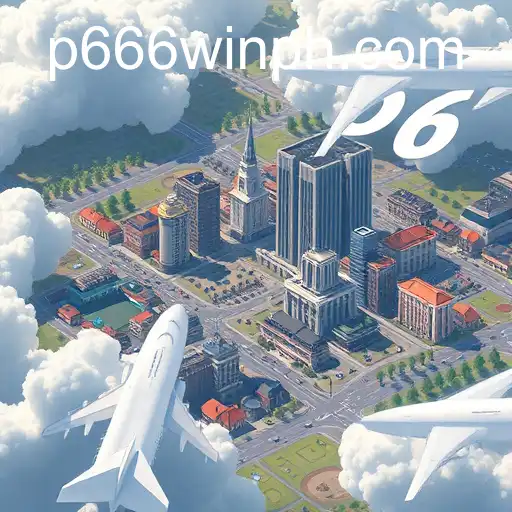
Simulation games, often referred to simply as 'sims,' have carved a unique space in the world of gaming. They stand out due to their roots in real-world activities while offering players the freedom to engage in anything from flying high in flight simulators to managing cities or households. With 'p666' as a defining keyword on certain gaming platforms, simulation games have garnered a significant following by enabling users to experience and manipulate virtual environments that mirror real life or even enhance it through creative avenues.
One of the most appealing aspects of simulation games is their staggering variety, offering experiences that range from the deeply complex to the wonderfully simplistic. Whether it's the intricacies of managing a fully operational farm, as seen in 'Stardew Valley,' or the sophisticated dynamics of running a transportation network in 'Transport Tycoon,' simulation games require strategic planning and decision-making. This genre is celebrated for both allowing players to relax and engage in low-pressure environments and challenging them with intricate gameplay mechanics.
Perhaps one of the most iconic names in simulation gaming is 'The Sims.' This life simulation series allows players to create and control people, guiding them through various life stages, building and furnishing homes, and even crafting entire neighborhood stories. Its appeal lies in its open-ended format, which has continued to evolve and expand since its inception in 2000.
Aside from entertainment, simulation games have educational merits, too. Flight simulators provide a realistic training environment for aspiring pilots, while games like 'Kerbal Space Program' offer insights into the physics of space travel. Through these interactive learning experiences, players gain knowledge across various fields while being engaged playfully.
The rise of virtual reality (VR) has further expanded the horizons of simulation games. Games like 'Beat Saber' and 'Job Simulator' utilize this technology to provide immersive experiences that place players in intriguing scenarios, making the virtual world more tangible than ever before. With VR, the possibilities for innovation in simulation games seem endless.
In summary, simulation games are more than just a pastime; they offer a unique blend of education, creativity, and strategic thinking. With their capacity to simulate almost any scenario, these games continue to evolve, captivating players worldwide with each new technological advancement. Whether you are new to the world of simulation games or a seasoned veteran, there is always something novel and exciting awaiting exploration.
